Cart
0
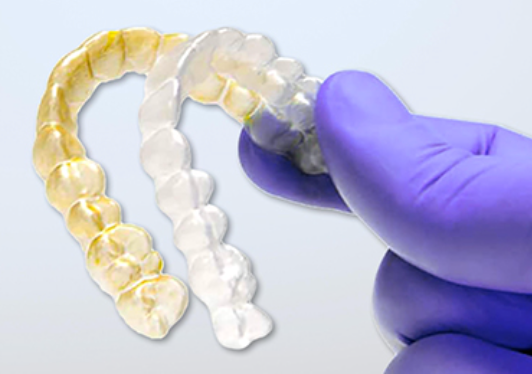
A retainer or aligner sits against your teeth for hours at a time. In that warm, moist space, saliva, food residue and bacteria build a thin film on the plastic. Over time that film turns into the cloudy haze, white spots and odor that so many retainer wearers know too well.
Brushing helps, but a toothbrush can't reach every groove and edge of a custom-fit appliance, and brushing too hard can scratch the plastic. Scratches give bacteria even more places to hide. That's why, as a dental hygienist, I recommend adding ultrasonic cleaning to your routine.
How ultrasonic cleaning works
An ultrasonic cleaner sends high-frequency sound waves through water. Those waves create millions of tiny bubbles that form and collapse against every surface of your appliance. This process, called cavitation, loosens buildup from grooves and edges that brushes miss, without scrubbing the plastic.
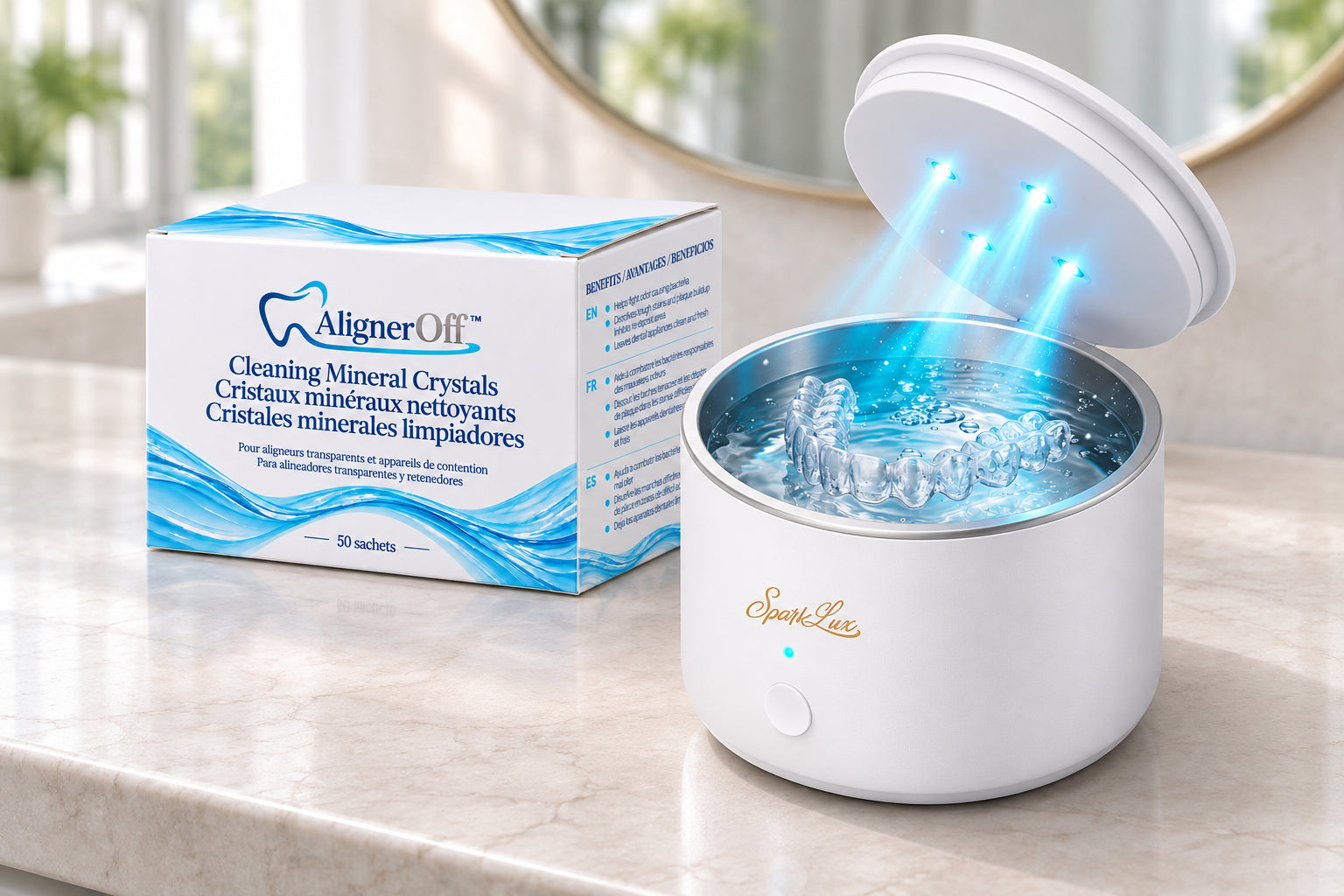
Dental offices have used ultrasonic cleaners on instruments for decades. A compact home unit like the SparkLux Ultrasonic Cleaner brings the same idea to your bathroom counter. It runs at 45 kHz, is rechargeable and quiet, and fits retainers, aligners, night guards and dentures.
A simple daily retainer cleaning routine
- Rinse first. As soon as you take your retainer or aligners out, rinse them in cool water to clear saliva and food.
- Fill the cleaner. Add lukewarm or cool water to the fill line. Never use hot water, which can warp the plastic.
- Add a cleaning agent (optional). For a deeper clean, add a scoop of Cleaning Crystals, which help lift cloudy film, stains and odor.
- Run a cycle. Place the appliance in the basket, close the lid and run a cycle: 3 minutes for everyday cleaning, or 5 minutes for a deeper clean.
- Rinse again. Rinse the appliance in cool water before you put it back in.
- Empty and dry the cleaner. Pour out the water and let the tank air-dry so it stays fresh for the next use.
On busy days, a no-soak option like Cleansing Foam keeps your appliance fresh between ultrasonic cycles.
What to avoid when cleaning retainers and aligners
- Hot or boiling water. Heat can warp clear plastic so it no longer fits.
- Toothpaste. Most toothpastes are abrasive and leave tiny scratches that trap bacteria.
- Bleach and harsh household cleaners. They can damage the material and are not meant for anything that goes in your mouth.
- Colored mouthwash for soaking. Dyes can stain clear appliances.
- The dishwasher or microwave. Both use heat that can deform your appliance.
- Leaving it out unprotected. Once it's rinsed, store it in a clean case, away from pets and napkins.
Every appliance is a little different. If your dentist, orthodontist or aligner brand gives specific cleaning instructions, follow those first.
Ultrasonic retainer cleaning FAQ
How often should I use an ultrasonic cleaner?
Once a day is a good habit for retainers and aligners, with a rinse every time you take them out.
Is ultrasonic cleaning safe for clear aligners?
Ultrasonic cleaning uses water and sound waves, not scrubbing, so it is gentle on plastic. Check your aligner brand's care instructions to be sure.
Will it remove cloudiness that's already there?
Regular cycles with a cleaning agent help lift film and stains. Heavy, hardened buildup may need a professional check.
Can I clean other appliances?
Yes: night guards, sports guards, sleep appliances and dentures all fit.
A clean appliance looks better, smells fresher and is better for your teeth and gums. The SparkLux Ultrasonic Cleaner and Cleaning Crystals make it a quick daily habit, with a 3-minute or 5-minute cycle, and the Prestige Elite Collection puts the whole routine in one set. New to aligners? Read how to remove clear aligners the right way.
This article is general information and does not replace advice from your dentist or orthodontist. Always follow your provider's and manufacturer's care instructions.